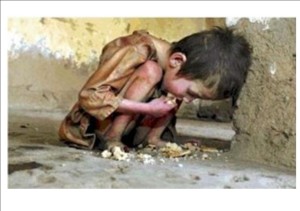
Matthew 25:31-45 (NIV) “31 “When the Son of Man comes in his glory, and all the angels with him, he will sit on his glorious throne. 32 All the nations will be gathered before him, and he will separate the people one from another as a shepherd separates the sheep from the goats. 33 He will put the sheep on his right and the goats on his left. 34 “Then the King will say to those on his right, ‘Come, you who are blessed by my Father; take your inheritance, the kingdom prepared for you since the creation of the world. 35 For I was hungry and you gave me something to eat, I was thirsty and you gave me something to drink, I was a stranger and you invited me in, 36 I needed clothes and you clothed me, I was sick and you looked after me, I was in prison and you came to visit me.’ 37 “Then the righteous will answer him, ‘Lord, when did we see you hungry and feed you, or thirsty and give you something to drink? 38 When did we see you a stranger and invite you in, or needing clothes and clothe you? 39 When did we see you sick or in prison and go to visit you?’ 40 “The King will reply, ‘Truly I tell you, whatever you did for one of the least of these brothers and sisters of mine, you did for me.’ 41 “Then he will say to those on his left, ‘Depart from me, you who are cursed, into the eternal fire prepared for the devil and his angels. 42 For I was hungry and you gave me nothing to eat, I was thirsty and you gave me nothing to drink, 43 I was a stranger and you did not invite me in, I needed clothes and you did not clothe me, I was sick and in prison and you did not look after me.’ 44 “They also will answer, ‘Lord, when did we see you hungry or thirsty or a stranger or needing clothes or sick or in prison, and did not help you?’ 45 “He will reply, ‘Truly I tell you, whatever you did not do for one of the least of these, you did not do for me.”
These Scriptures teach us that Christianity can never be separated from social justice. In the Old Testament the law was written on stone at Mt Sinai. In the New Testament these righteous laws are written on our hearts beginning in Acts 2 when the Holy Spirit was poured out.
The Year of Jubilee Given at Mt Sinai – Leviticus 25:8-17 (NIV) “‘Count off seven sabbath years—seven times seven years—so that the seven sabbath years amount to a period of forty-nine years. 9 Then have the trumpet sounded everywhere on the tenth day of the seventh month; on the Day of Atonement sound the trumpet throughout your land. 10 Consecrate the fiftieth year and proclaim liberty throughout the land to all its inhabitants. It shall be a jubilee for you; each of you is to return to your family property and to your own clan. 11 The fiftieth year shall be a jubilee for you; do not sow and do not reap what grows of itself or harvest the untended vines. 12 For it is a jubilee and is to be holy for you; eat only what is taken directly from the fields. 13 “‘In this Year of Jubilee everyone is to return to their own property. 14 “‘If you sell land to any of your own people or buy land from them, do not take advantage of each other. 15 You are to buy from your own people on the basis of the number of years since the Jubilee. And they are to sell to you on the basis of the number of years left for harvesting crops. 16 When the years are many, you are to increase the price, and when the years are few, you are to decrease the price, because what is really being sold to you is the number of crops. 17 Do not take advantage of each other, but fear your God. I am the Lord your God.
The social laws of Israel had capital incentive as well as socialistic protections. Every fifty years the land went back to the original tribe. Israel didn’t keep this and it was the major reason they went to Babylon for 70 years according to 2Chron. 36:18-22. Every 7 years they were to forgive debt and let the land rest 1 year. They were to save the corners of their fields for the poor. They were to glean their fields only once so after the poor could come in and have food and even the animals could eat. Leviticus 19:9 (NIV) “‘When you reap the harvest of your land, do not reap to the very edges of your field or gather the gleanings of your harvest. 10 Do not go over your vineyard a second time or pick up the grapes that have fallen. Leave them for the poor and the foreigner. I am the Lord your God.
During the 50 years they could sell the land but after fifty years it would go back to the original families and tribes. If one of the fathers sold the ancient landmark it would return after fifty years to his off spring and children. This also protected against the amassing of land in the hands of the rich or corporations and Oligarchies. This social justice in laws protected the people, the land, the culture and the future of Israel. Israel as a kingdom of priests was to teach it to the other nations and will in Isaiah 2 during the millennial kingdom. Isaiah 2:1-5 (NIV) This is what Isaiah son of Amoz saw concerning Judah and Jerusalem: 2 In the last days the mountain of the Lord’s temple will be established as the highest of the mountains; it will be exalted above the hills, and all nations will stream to it. 3 Many peoples will come and say, “Come, let us go up to the mountain of the Lord, to the temple of the God of Jacob. He will teach us his ways, so that we may walk in his paths.” The law will go out from Zion, the word of the Lord from Jerusalem. 4 He will judge between the nations and will settle disputes for many peoples. They will beat their swords into plowshares and their spears into pruning hooks. Nation will not take up sword against nation, nor will they train for war anymore 5 Come, descendants of Jacob, let us walk in the light of the Lord.
Leviticus 23-25 dealt with the feast days, Sabbaths and feast of Jubilee every fifty years when this great justice of the land going back to the original tribes and families was to take place. Even when the land was in individual families there were righteous laws that made that very land used for the poor and needy. The concept that land is strictly to be used for wealth is not a Biblical concept. Leviticus 25:23 (NIV) “The land shall not be sold for ever: for the land is mine, for ye are strangers and sojourners with me.” God always wanted the land to be in the hands of good stewards that new the land was ultimately his and was part of his love for all. This concept today that we can have businesses own water and rain etc. is wrong. Can a corporation own the moon or sun or stars? Psalms 24:1 (NKJV) “The earth is the Lord’s, and all its fullness, The world and those who dwell therein.”
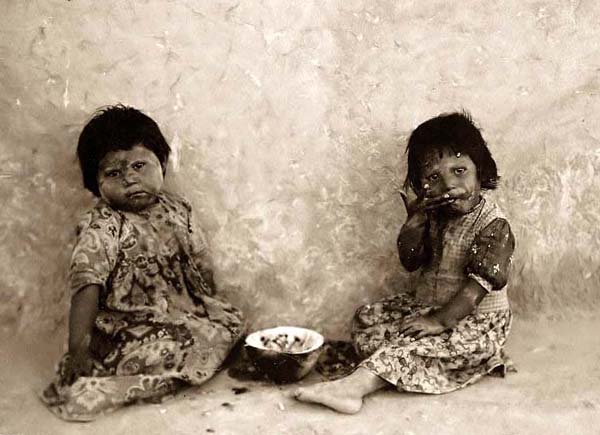
Love thy neighbor as thyself and do onto others as we would want them to do onto us is certainly a command to the individual. God also gave righteous laws to protect people and bring justice to the lowest wrung of society. It wasn’t just the libertarian perspective of love your neighbor as yourself by the individual. It was also solid laws of protection concerning foreclosures, disenfranchisement, amassing of land; which is how wealth is accumulated and the stability of an economy based on social justice. Proverbs 31:7 (NIV) “Speak up for those who cannot speak for themselves, for the rights of all who are destitute.”
Here are a few Scriptures the Bible speaks about concerning the poor and oppressed. All NIV –
Proverbs 14:31 “He who oppresses the poor reproaches his Maker, but he who is gracious to the needy honors Him.”
Deut. 26:12 “When you have finished paying the complete tithe of your increase in the third year, the year of tithing, then you shall give it to the Levite, to the stranger, to the orphan and the widow, that they may eat in your towns, and be satisfied.”
Luke 14:12-14 “When you give a luncheon or a dinner, do not invite your friends or your brothers or your relatives or rich neighbors, lest they also invite you in return, and repayment come to you. But when you give a reception, invite the poor, the crippled, the lame, the blind, and you will be blessed, since they do not have the means to repay you; for you will be repaid at the resurrection of the righteous.”
Ezekiel 22:29,31. “The people of the land have practiced oppression and committed robbery, and they have wronged the poor and needy and have oppressed the sojourner without justice… Thus I have poured out My indignation on them; I have consumed them with the fire of My wrath; their way I have brought upon their heads,” declares the Lord GOD.
Isaiah 10:1-3 “Woe to those who enact evil statutes, and to those who continually record unjust decisions, so as to deprive the needy of justice, and rob the poor of My people of their rights… Now what will you do in the day of punishment, and in the devastation which will come from afar?”
Proverbs 29:7 “The righteous is concerned for the rights of the poor; the wicked does not understand such concern.”
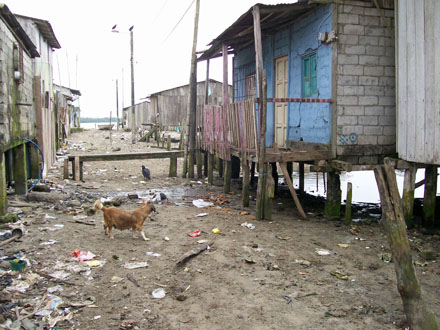
So many times we see Christian denominations and churches on the side of oppression like the churches in Germany during world war two. They went with Hitler and the Nazi’s while the ovens were filled with Jews and dissidents. We seen Native American’s slaughtered and conquered then placed in reservations and forced to give up their own language and culture. Many trained like dogs by so-called Christian society. We have seen missionaries carry Western culture, ideals and flags acting like they were equal to the cross and love. We have seen conquistador mentality come into lands in the name of manifest destiny and supported by confessing churches. We see the rich supported and the poor denied. How many churches supported Jim Crow laws and went along with segregation? The church is to stand for righteousness not oppression, racism and injustice.
One out of three were slaves in the Roman Empire during the writings of the Apostle Paul. Christianity came into the lower classes and everywhere in the Gospels and epistles the seeking of wealth was condemned. Everywhere the sharing of our wealth was encouraged. Everywhere God was trying to lift up the least and his true church should be the same way.
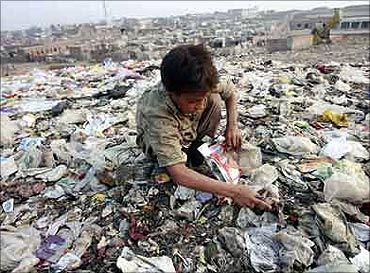
It’s been stated that all the charities in the USA would only bring in one tenth of what the poor in our own land need. Sometimes social justice works with governments to try to help people. Hurricanes, natural disasters and many other things take government coordination and funds. Programs that help people are needed. Not everything comes under church authority. Many times our charity reaches out to people by supporting good works not under our brand of Christianity. Do we only support Christian fire departments or police departments? When we can influence governments to help the poor, disenfranchised and less fortunate we should. This doesn’t mean we think government is our God. It means we use governments like tools to help people in the here and now. 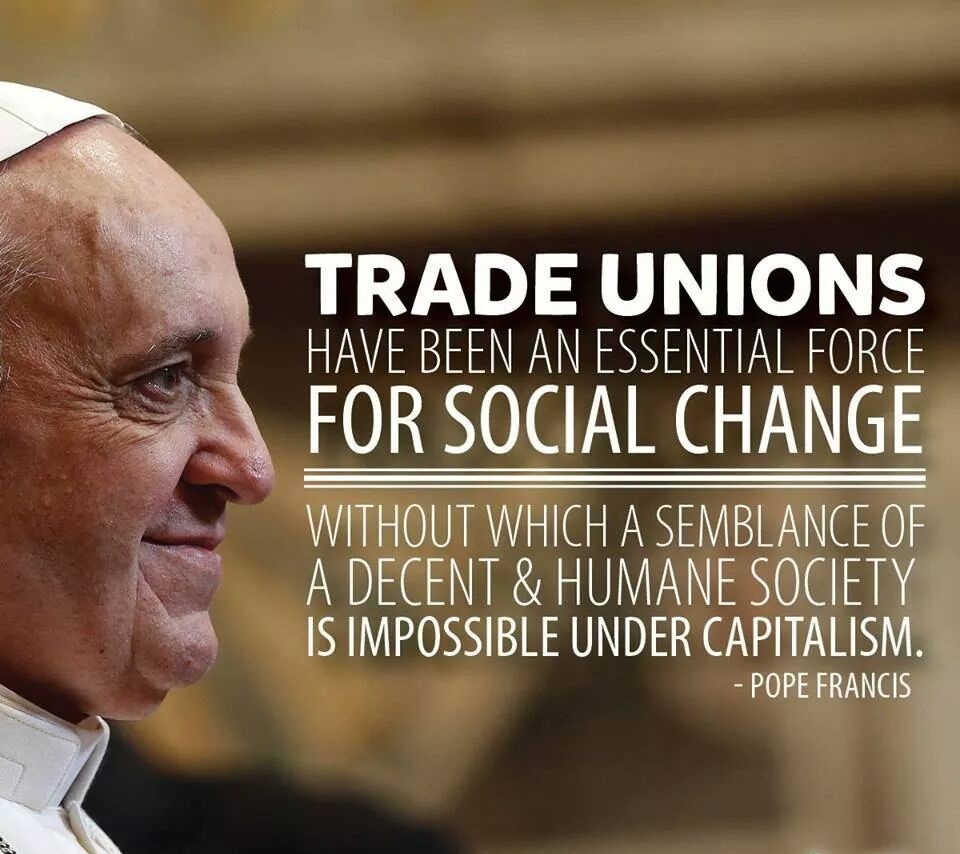
We believe a working person deserves a fair wage and one where they have dreams. Jeremiah 22:13 (NIV) “Woe to him who builds his palace by unrighteousness, his upper rooms by injustice, making his own people work for nothing, not paying them for their labor.” James 5:1-6 (NIV) “Now listen, you rich people, weep and wail because of the misery that is coming on you. 2 Your wealth has rotted, and moths have eaten your clothes. 3 Your gold and silver are corroded. Their corrosion will testify against you and eat your flesh like fire. You have hoarded wealth in the last days. 4 Look! The wages you failed to pay the workers who mowed your fields are crying out against you. The cries of the harvesters have reached the ears of the Lord Almighty. 5 You have lived on earth in luxury and self-indulgence. You have fattened yourselves in the day of slaughter.[a] 6 You have condemned and murdered the innocent one, who was not opposing you.”
We remember what the glorified Jesus said to the church of Laodicea Revelation 3:14-18 (NIV) “To the angel of the church in Laodicea write: These are the words of the Amen, the faithful and true witness, the ruler of God’s creation. 15 I know your deeds, that you are neither cold nor hot. I wish you were either one or the other! 16 So, because you are lukewarm—neither hot nor cold—I am about to spit you out of my mouth. 17 You say, ‘I am rich; I have acquired wealth and do not need a thing.’ But you do not realize that you are wretched, pitiful, poor, blind and naked. 18 I counsel you to buy from me gold refined in the fire, so you can become rich; and white clothes to wear, so you can cover your shameful nakedness; and salve to put on your eyes, so you can see.”
We understand that sometimes doors are shut and we can’t bring  in changes. We know the words of John Adams the second President of the United States of America – “Remember, democracy never lasts long. It soon wastes, exhausts, and murders itself. There never was a democracy yet that did not commit suicide.”
We understand fallen nature wins and always leads to imprisonment. We know that during our time we still battle the devil and his angels and we can only do so much. Luke 4:5-6 (NIV) “The devil led him up to a high place and showed him in an instant all the kingdoms of the world. 6 And he said to him, “I will give you all their authority and splendor; it has been given to me, and I can give it to anyone I want to.” After Jesus defeated the devils temptations in the wilderness he preached his first sermon out of Isaiah 61 showing he was the Jubilee. He is the one that will bind the devil in the Great Tribulation period and free the land with justice and mercy. Luke 4:16-20 (NIV) “He went to Nazareth, where he had been brought up, and on the Sabbath day he went into the synagogue, as was his custom. He stood up to read, 17 and the scroll of the prophet Isaiah was handed to him. Unrolling it, he found the place where it is written: 18 “The Spirit of the Lord is on me, because he has anointed me to proclaim good news to the poor. He has sent me to proclaim freedom for the prisoners and recovery of sight for the blind, to set the oppressed free,19 to proclaim the year of the Lord’s favor.”[a] 20 Then he rolled up the scroll, gave it back to the attendant and sat down. The eyes of everyone in the synagogue were fastened on him.” Christians have great hope. We know someday everything will works out. We never lose hope now as we do battle against evil. We know the full Jubilee will come and all the forces of evil will be defeated.
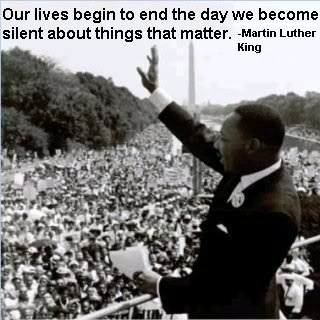 We can strengthen the things that remain and try to accomplish what we can. Sometimes we simply cannot change a situation but we can understand. We can have true compassion to immigrants, refugees, and victims of societal oppression. We understand that God will straighten out things completely in time and we believe in the full serenity prayer by Reinhold Niebuhr
Serenity Prayer – “God grant me the serenity to accept the things I cannot change; courage to change the things I can; and wisdom to know the difference. Living one day at a time; Enjoying one moment at a time; Accepting hardships as the pathway to peace; Taking, as He did, this sinful world as it is, not as I would have it; Trusting that He will make all things right if I surrender to His Will; That I may be reasonably happy in this life and supremely happy with Him Forever in the next. Amen.”
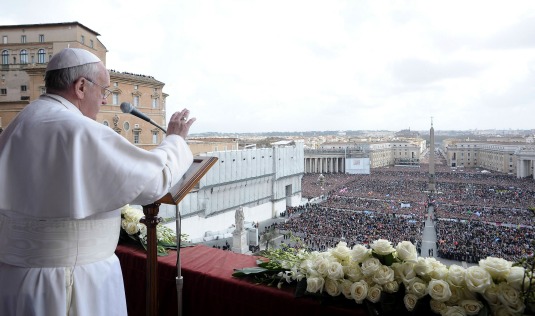 When we can change things we should we reach out to people. Pope Francis in 2013 spoke and wrote some powerful words as a Christian, “How are we using the earth’s resources?” the Pope asks. “Contemporary societies should reflect on the hierarchy of priorities to which production is directed. It is a truly pressing duty to use the earth’s resources in such a way that all may be free from hunger.” “I think of the devastation of natural resources and ongoing pollution, and the tragedy of the exploitation of labor,” he writes. “I think too of illicit money trafficking and financial speculation, which often prove both predatory and harmful for entire economic and social systems, exposing millions of men and women to poverty.”
The alienated times we are in even attacks the sanctuary of the womb we all come from. We are against the killing of the least of these. Abortion as a form of birth control is pure wickedness. We agree with the words of Pope Francis in 2014. “It is horrific even to think that there are children, victims of abortion, who will never see the light of day,” Abortion, he said, was part of a “throwaway culture” that had enveloped many parts of the world. “Unfortunately, what is thrown away is not only food and dispensable objects, but often human beings themselves, who are discarded as unnecessary,”
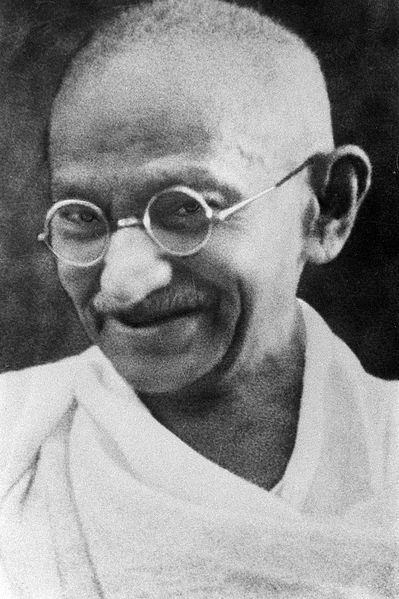 When we cannot change circumstances we can understand. Understanding where ethnic groups,immigrants, refugees and poverty systems are coming from breaks down prejudice and stereotypes. In the words of Mahatma Ghandi, “The Roots of Violence: Wealth without work, Pleasure without conscience, Knowledge without character, Commerce without morality, Science without humanity, Worship without sacrifice, Politics without principles”
Table of the Lord stands up for universals we find in the Scriptures. We are against racism, neocolonialism, militarism, imperialism, trickle down economics and nationalism pawning itself off as Christianity. We want to understand the roots of poverty. We stand for universal healthcare like Israel has. We believe in educating the least of these not just the wealthy or talented. We stand up against abortion as a form of birth control with no regard for the fetus, which we all were at one time. We believe in fighting for the least of mankind while never compromising our faith in the eternal kingdom of God. We know we can never bring in the eternal kingdom or utopia but as Christians we always want to help and understand the least of mankind.
Sanctification 1 (Love of the Poor)
Sanctification 2 (the poor)
http://youtu.be/9t1a5DLmR8U
VATICAN CITY (AP) – Pope Francis called Friday for governments to redistribute wealth to the poor in a new spirit of generosity to help curb the “economy of exclusion” that is taking hold today.
Francis made the appeal during a speech to U.N. Secretary-General Ban Ki-moon and the heads of major U.N. agencies who are meeting in Rome this week.
Latin America’s first pope has frequently lashed out at the injustices of capitalism and the global economic system that excludes so much of humanity.
On Friday, Francis called for the United Nations to promote a “worldwide ethical mobilization” of solidarity with the poor in a new spirit of generosity.
He said a more equal form of economic progress can be had through “the legitimate redistribution of economic benefits by the state, as well as indispensable cooperation between the private sector and civil society.”
Francis had a similar message to the World Economic Forum in January and in h is apostolic exhortation “The Joy of the Gospel.” That document, which denounced trickle-down economic theories as unproven and naive, provoked criticism in the U.S. that he was Marxist.
Francis has denied he’s Marxist, and spent years in Argentina battling Marxist excesses of liberation theology. But he has said from the outset that he wants a church that “is poor and for the poor” and ministers to the most marginal of society.
On Friday, he urged the U.N. to promote development goals that attack the root causes of poverty and hunger, protect the environment and ensure “dignified” labor for all.
“Specifically, this involves challenging all forms of injustices and resisting the economy of exclusion, the throwaway culture and the culture of death which nowadays sadly risk becoming passively accepted,” he said.
Perspective
Tuberculosis in Africa — Combating an HIV-Driven Crisis
Richard E. Chaisson, M.D., and Neil A. Martinson, M.B., B.Ch., M.P.H.
N Engl J Med 2008; 358:1089-1092March 13, 2008DOI: 10.1056/NEJMp0800809
Share:
ArticleReferencesCiting Articles (34)
Slide Show
Tuberculosis in Africa.
Tuberculosis in Africa.
Africa is facing the worst tuberculosis epidemic since the advent of the antibiotic era. Driven by a generalized human immunodeficiency virus (HIV) epidemic and compounded by weak health care systems, inadequate laboratories, and conditions that promote transmission of infection, this devastating situation has steadily worsened, exacerbated by the emergence of drug-resistant strains of tuberculosis.
Africa, home to 11% of the world’s population, carries 29% of the global burden of tuberculosis cases and 34% of related deaths, and the challenges of controlling the disease in the region have never been greater. The World Health Organization (WHO) estimates that the average incidence of tuberculosis in African countries more than doubled between 1990 and 2005, from 149 to 343 per 100,000 population (see maps
Estimated Incidence of Tuberculosis per 100,000 Population in African Countries in 1990 and 2005.
)1 — a stark contrast to the stable or declining rates in all other regions during this period. In 1990, two African countries, Mali and Togo, had an incidence greater than 300 per 100,000; by 2005, 25 countries had reached that level, and 8 of them had an incidence at least twice that high.
The unprecedented growth of the tuberculosis epidemic in Africa is attributable to several factors, the most important being the HIV epidemic. Although HIV is Africa’s leading cause of death, tuberculosis is the most common coexisting condition in people who die from AIDS (see radiograph
Radiograph Showing Tuberculosis in a Patient with HIV Infection.
). Autopsy studies show that 30 to 40% of HIV-infected adults die from tuberculosis.2 Among HIV-infected children, tuberculosis accounts for up to one in five of all deaths.3
As HIV prevalence increased in Africa — most strikingly in the 1990s — and the cellular immunocompetence of populations became impaired, susceptibility to tuberculosis grew dramatically. South African gold miners, for example, already had one of the highest incidence rates of tuberculosis in the world, but rates remained stable between 1990 and 1999 among HIV-negative miners, while rates among HIV-positive miners increased by a factor of 10.
The association between HIV infection and tuberculosis stems from two distinct processes. In some cases, populations with latent tuberculosis acquire HIV infection, which increases 100-fold the risk of reactivation of tuberculosis. In other cases, people with HIV-induced immunosuppression acquire new tuberculosis infections and are at extraordinarily high risk for active tuberculosis. This cycle of infection and disease is amplified by the interaction between patients with active tuberculosis and those with HIV infection in clinics, hospitals, and the broader community.
The ability of African health care systems to respond to, manage, and contain the growing number of cases of tuberculosis is constrained by limitations of funding, facilities, personnel, drug supplies, and laboratory capacity. Although the President’s Emergency Plan for AIDS Relief (PEPFAR) and the Global Fund to Fight AIDS, Tuberculosis, and Malaria have donated large sums of money to help address Africa’s health problems, most of the money has been earmarked for HIV, with a lesser focus on tuberculosis.
Another critical factor concerns early diagnosis and treatment of tuberculosis, which limits the spread of the disease and reduces deaths. Throughout Africa, diagnosis rests on the microscopical detection of acid-fast bacilli in sputum, an insensitive technique that is particularly ill suited to the detection of tuberculosis in HIV-infected patients, who have fewer bacilli in their sputum and have more extrapulmonary tuberculosis than HIV-negative patients; the WHO estimates that only half of all persons with smear-positive tuberculosis are identified. Modern culture and nucleic acid–amplification systems are rarely available. As a result, many people remain ill and contagious for prolonged periods before the disease is detected, and thousands die without ever having received a diagnosis of tuberculosis. Unfortunately, even with diagnosis, the average rate of successful treatment is less than 70%, far below the WHO target of 85%, making both relapse and the emergence of drug resistance common.
The emergence of drug resistance has been a largely neglected aspect of Africa’s epidemic; although multidrug-resistant (MDR) tuberculosis has been present for some time, the number of cases was thought to be low. A 2006 outbreak of extensively drug-resistant (XDR) tuberculosis in South Africa, however, has highlighted this serious problem. In KwaZulu-Natal Province, half the XDR cases in patients with HIV infection were acquired in hospitals or clinics, and several occurred in health care workers. Mortality exceeded 95% — chilling evidence of the critical importance of preventing the nosocomial spread of tuberculosis. XDR tuberculosis will undoubtedly continue to emerge elsewhere in Africa: Botswana’s first two cases were reported in early 2008.
In the midst of this bleak situation, there is a glimmer of hope. In 2005, the African ministers of health declared a “TB Emergency,” promising swift and concerted action to combat the disease. And the global health community has increased its investment in tuberculosis control and research. HIV activists, having achieved success in their AIDS awareness and funding efforts, have set their sights on tuberculosis. At an international tuberculosis conference in South Africa in November 2007, more than 3000 delegates brought a new level of attention and urgency to Africa’s unprecedented health problems.
Achieving results, however, requires enormous investment and commitment, particularly to the development of new biomedical tools. The availability of point-of-care diagnostic tests could substantially reduce the incidence of and mortality from tuberculosis and prompt earlier treatment, thus limiting transmission. Rapid detection of drug-resistant strains would facilitate earlier access to appropriate therapy. New drugs that shorten cure times would reduce transmission, improve treatment outcomes, and prevent the emergence of drug resistance. And a new vaccine could protect future generations. (Although bacille Calmette–Guérin is the world’s most widely used vaccine, there is little evidence that it is effective in adults.) Fortunately, research in these areas is under way, led by innovative partnerships funded largely by the Bill and Melinda Gates Foundation and European countries.
In the meantime, Africa’s health care systems can adopt new strategies for improving disease-control outcomes. Better use of existing, highly sensitive culture techniques could reduce mortality rates associated with tuberculosis by 20% or more,4 and implementation of treatment programs that meet WHO targets could have a substantial effect on survival and transmission rates. Interventions directed at people with the highest risk, including families of patients with tuberculosis or HIV infection, could be extremely effective.
The WHO, for its part, is promoting various interventions, including supplementation of sputum smears with liquid tuberculosis-culture systems for patients with HIV, increased investments in laboratory services, surveillance of drug resistance, and widespread use of preventive therapy for HIV-infected persons. A new initiative launched by the WHO’s Stop TB and HIV departments emphasizes the three I’s: intensified case finding, isoniazid preventive therapy, and infection control.
Early identification of symptomatic people with active tuberculosis is an important strategy for the reduction of transmission and mortality (see photo
Community-Based Effort in Zambia to Improve Tuberculosis Detection through Education and Use of “Sputum Depots” That Provide Diagnostic Tests.
). Studies in Africa show that the prevalence of undetected tuberculosis ranges from 2 to 3% among HIV-infected pregnant women to 8 to 10% among people with a new diagnosis of HIV infection. Preventive therapy with isoniazid can reduce tuberculosis incidence, yet less than 1% of all HIV-infected people worldwide who could benefit from this intervention receive it.1 Antiretroviral therapy alone is insufficient to control tuberculosis, but analyses suggest that isoniazid significantly augments the effect of HIV drugs.5 Ongoing trials are testing community-wide preventive therapy and new combinations of drugs that might shorten the course of preventive therapy and extend its durability.
As one of its Millennium Development Goals, the United Nations aims to reduce the global prevalence of tuberculosis and mortality associated with tuberculosis to 50% of their 1990 levels. Yet a 2006 WHO report, The Global Plan to Stop TB, 2006–2015, suggests that this goal is unattainable in Africa, where more than half a million people die each year from tuberculosis. Africa desperately needs substantially increased investments in research, health care systems, diagnostic laboratories, human resources, and public health services if it is to shed its heavy burden of suffering and death.
WHAT WE’RE READING
Behind the Kitchen Door: Serving Food While Sick
April 4, 2014
by Saru Jayaraman
1
This is an excerpt from Saru Jayaraman’s book Behind the Kitchen Door. Jayaraman, co-founder of the Restaurant Opportunities Centers United, appeared on Moyers & Company to talk about food workers’ fight for a living wage and better working conditions.
I had a really bad cold. My nose was running, I was sneezing, and I had a bad cough and a fever. I could not call in sick because no work meant no money and I couldn’t afford it at that time. My kids were very young, so I went to work to see if I could make it through the day. Halfway through the day, the sneezing, coughing, and runny nose got worse. I said to the manager, “I am really sick and need to go because I could make others sick and I am dealing with food.” She laughed and told me, “Try not to cough then.” So I had to work that day sick, and who knows how many customers I got sick because I couldn’t go to the back and leave the counter to wash my hands after every sneeze or nose wipe. Later on, all of us got sick, one by one, and all this came from another worker who came to work sick, like me, and was not allowed to leave work.
— Fast-Food Worker, Woman, 10 Years in the Industry, Detroit
It’s common sense: the meal that arrives at your table when you eat out is not just a product of its raw ingredients. It’s a product of the hands that chop, cook, and plate it, and the people to whom those hands belong. Still, how our food is handled in a restaurant, and by whom, is something over which we have almost no control. Most of us have experienced food poisoning at least once, but we don’t usually know what, or who, caused it.
My own experience was unforgettable to me, though a common experience of many. Mamdouh and I were in the process of trying to open ROC’s first worker-owned restaurant. The restaurant was Mamdouh’s idea. After losing his job at Windows on the World, he’d dreamed of opening his own restaurant with a group of his former coworkers. All of them — the survivors — were jobless after 9/11.
We finally did open it, a restaurant called COLORS, which reflected the workers’ extraordinary diversity — but it took many years of struggle and conflict, help from a lot of different friends, and lots and lots of meetings. One of those meetings was with Brian Glick and Carmen Huertas, law professors from Fordham University and the City University of New York who’d agreed to work with us to draft the bylaws and governing documents for the restaurant. Early in the process, Brian invited Mamdouh and me to eat lunch at an Indian restaurant in Midtown near the law school. Brian was treating and it really was a treat. The restaurant was beautiful — gold-plated silver dishware, ornate chairs and tables, fancy folded napkins and delicious food. Customers here expected perfection, and it definitely appeared as though they got it. It was a joy to be talking about the thrilling prospect of opening a worker-owned restaurant over creamed spinach, eggplant curry and chicken tikka masala.
When I got home several hours later, my stomach started to feel strange. It had been an incredibly busy day, and I tried to relax by watching television. By nine that night I was doubled over in pain. I hadn’t yet made the connection between my stomach pain and eating out at the fancy Indian restaurant. All I could think about was my discomfort. What happened after that is familiar to most of us, and not something I need to describe. At some point in the middle of my misery I thought about what I’d eaten in the last 24 hours. The only meal that had been unusual for me was the one I had eaten at the Indian restaurant.
I was up most of the night and barely able to get out of bed the next morning. At the time I was helping Floriberto and his coworkers fight for their stolen wages and end other abuses at the restaurant where they worked, so I had no choice but to attend a major settlement conference with the restaurant’s defense lawyers that afternoon. I hobbled into the fancy law firm clutching my Pepto-Bismol. The opposing counsel joked that the defense counsel had made me “that sick.”
Saru Jayaraman on All Work and No Pay
From Poverty Wages to Poor Sanitation
The Centers for Disease Control and Prevention estimates that one in six Americans suffers from food poisoning each year, and 3,000 of us die from it. This seems only natural, given that most of us eat out at least once a week. We’re bound to get sick at least once or twice with a foodborne illness when many different hands are touching our food. Incidents of food poisoning are of course not unique to Indian restaurants. Most of us do wonder, though, after getting sick, How did this happen? Where did this come from? And what exactly happens behind the restaurant kitchen door is a complete mystery to most of us.
Although we have become obsessed with healthy, local, sustainable, organic, grass-fed, wild, and generally “better” food, we usually have no idea how that food is prepared and under what conditions. We should, however, know this: the health and safety and overall working conditions of restaurant workers in the United States directly affect the health and safety of consumers.
ROC has found in industry-wide surveys that the vast majority of restaurants across the country pressure their employees to work while sick or injured. ROC has found in industry-wide surveys that the vast majority of restaurants across the country pressure their employees to work while sick or injured — giving us, the diners, an extra helping of germs with our meals and putting us at risk for foodborne illness. If this doesn’t surprise you, consider another pattern: the “low road” restaurants that don’t take great care of their employees, especially with regard to wages, tend to be the same restaurants that don’t take great care of their customers, especially with regard to food safety.
ROC research shows that the employers who steal tips, don’t pay overtime, force employees to work off the clock and don’t provide health benefits are the same employers who pressure their workers to engage in practices that threaten the health and safety of customers. In our experience, this is because employers who cut corners and steal from their workers are also likely to cut corners when it comes to customer health and safety.
Isn’t that common sense? If a restaurant isn’t responsible enough to pay its workers properly, how can we expect it to be responsible enough to make sure that the food doesn’t include an extra helping of germs?
Excerpt from Behind the Kitchen Door by Saru Jayaraman, published by Cornell University Press. © 2013. All rights reserved.
RELATED CONTENT
i’ve been leaning about the aids and TB epidemic more and more in Africa and it makes me so sick that it is not a priority with our government and the Europeans….the tragedy in Rwanda was and is criminal and so is rich nations not having healthcare…..God wants to alleviate needless suffering.Healing is scriptural, and for today… joe and Lance
Meditate On Luke 6:19 Everyone Who Came To Jesus Was Healed
And the whole multitude sought to touch Him, for power went out from Him and healed them all.- Luke 6:19
…
Did you know that when Jesus walked on earth, more than two-thirds of His ministry involved healing the sick? He went about healing the sick and all who came to Him were healed. The Bible records that “the whole multitude sought to touch Him, for power went out from Him and healed them all”.
I wish that somebody in Hollywood would produce that scene in Luke 6:19. You see the sick, lame and blind coming to Jesus. And every time one of them touches Him, BAM! His healing virtue is powerfully released and the person is healed and overjoyed!
Beloved, that’s a powerful image to have in your mind as you meditate on the Lord’s healing promises for you. See yourself receiving from His compassion and His power to heal you. Before long, His healing will fully manifest in your body and fill you with joy!
http://us2.campaign-archive1.com/?u=a150d1f30f96378c872f47725&id=aceae754cf&e=b1c1488bd4